As an Amazon Associate, we earn from qualifying purchases. Some links on this site are affiliate links at no extra cost to you. Our recommendations are based on thorough research and editorial judgment.


Understanding IP Ratings in Waterproof Phone Cases

IP ratings indicate a phone case’s protection against dust and water. The first digit (0-6) shows solid ingress protection; for example, a rating of 6 means it’s completely dust-tight. The second digit (0-9) signifies water resistance; an IP67 rating allows temporary submersion in 1 meter of water for 30 minutes. These ratings considerably inform users on device durability, particularly for outdoor use. Understanding these specifications is essential, so exploring further details can be beneficial.
Key Takeaways
- IP ratings indicate a device’s ability to resist dust and water, helping consumers gauge protection levels in phone cases.
- The first digit of the rating reflects dust protection, while the second digit signifies water resistance; higher numbers denote better protection.
- An IP68 rating offers the best water immersion capabilities, suitable for underwater activities, with resistance to submersion beyond 1 meter.
- Regular wear can compromise a case’s original IP rating, emphasizing the importance of maintaining device integrity through cleaning and maintenance.
- Selecting cases with high IP ratings and military-grade drop protection, like MIL-STD-810H, enhances overall durability for outdoor use.
What Are IP Ratings?
You may be interested


IP ratings, or Ingress Protection ratings, are essential for understanding how well electronic devices, like smartphones, can resist dust and water. Established by the International Electrotechnical Commission (IEC) in 1976, these ratings consist of two digits. The first digit indicates dust protection on a scale of 0 to 6, where 6 signifies dust-tight capacity. The second digit denotes water resistance on a scale of 0 to 9, with higher numbers indicating better protection. For instance, an IP67 rating means a device can withstand temporary immersion in water, while an IP68 rating allows for sustained immersion at depths of 2 to 6 meters. Knowing these ratings helps consumers choose suitable devices that can survive dusty and wet environments. Many waterproof phone cases, including the Hiearcool Waterproof Phone Pouch, are certified with an IPX8 rating, ensuring enhanced protection during water activities.
How IP Ratings Function

Understanding how IP ratings function is essential for consumers seeking durable electronic devices. The IP rating system is a two-digit code that indicates a device’s level of protection against dust and water. The first digit ranges from 0 to 6, signifying solid particle resistance, while the second digit spans 0 to 9K, representing liquid resistance. A rated IP, such as IP68, indicates robust water protection, allowing for submersion between 2 to 6 meters. Meanwhile, ratings like IP67 permit shorter submersion, generally up to 1 meter for 30 minutes. If a device has an “X,” like IPX7, it has not been tested for dust protection. IPX8 rated cases provide optimal waterproof protection, usable underwater up to 100 feet. Companies that seek higher waterproof ratings demonstrate their commitment to rigorous testing and reliable product protection.
The Importance of IP Ratings in Phone Cases
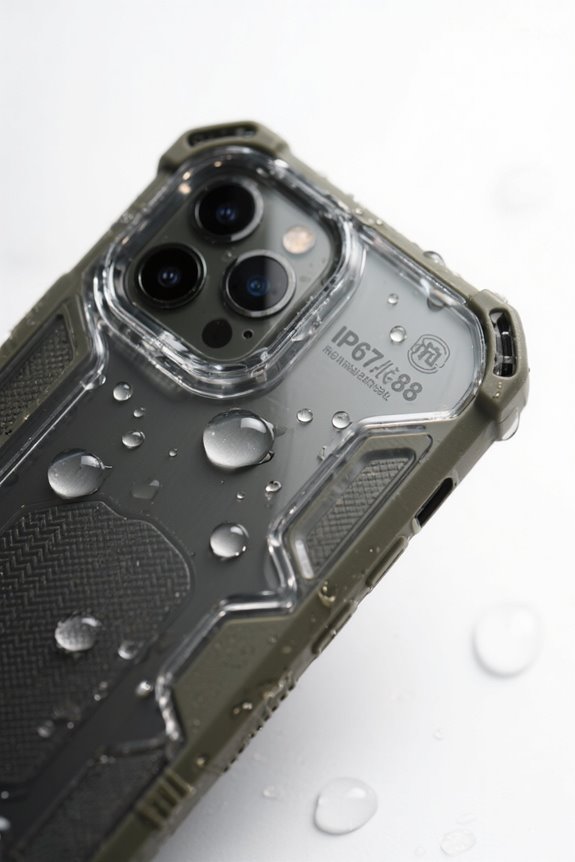
Water resistance and dust protection are significant considerations for consumers purchasing phone cases. IP ratings, such as IP67 and IP68, provide critical information regarding a case’s capability to protect against moisture and debris. An IP67 rating signifies protection against submersion in water up to 1 meter for 30 minutes, making it suitable for daily moisture exposure. In contrast, IP68-rated cases can endure deeper submersion, usually between 1.5 to 2 meters, tailored for those involved in aquatic activities. With water damage accounting for 21% of smartphone accidents, understanding these ratings is essential. Investing in rugged phone cases with high IP ratings not only provides waterproof protection but also often includes military-standard drop protection, promoting overall device durability in challenging conditions. Cases with an IP54 rating provide protection against both water and dust, offering enhanced resistance for outdoor use.
IP Rating Structure Explained
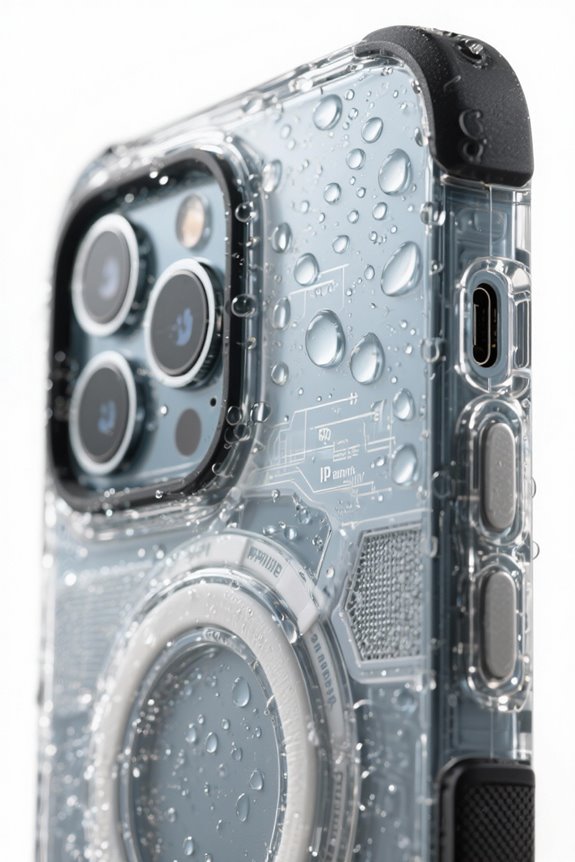
For consumers analyzing the resilience of phone cases, grasping the structure of IP ratings is essential. The IP rating structure consists of two digits, providing critical information about protection against water and dust. The first digit, ranging from 0 to 6, indicates the case’s protection against solid objects, with 6 representing complete dust-tight capability. The second digit, from 0 to 9, signifies water resistance; for instance, an IP67 rating means a device can withstand submersion in 1 meter of water for 30 minutes. Waterproof phone pouches often use IPX8/IP68 certifications to offer reliable protection against water, dust, and sand. Specifically, an “X” in an IP rating, like IPX7, designates untested dust protection. This standardized structure, established by the International Electrotechnical Commission, guarantees clarity in evaluating waterproof phone cases. Understanding these ratings aids informed purchasing decisions.
Understanding the First Digit: Solid Ingress Protection

Solid ingress protection is a crucial aspect of an IP rating, denoting how well a phone case can fend off solid objects. The first digit of an IP rating ranges from 0 to 6, indicating varying levels of protection against dust and other particulates. For instance, an IP1X rating safeguards against large objects like a human hand, while IP2X covers items the size of an adult finger. Ratings like IP5X allow minimal dust intrusion, offering some level of protection but not complete. In contrast, an IP6X rating guarantees total prevention of dust entry, making devices immune to harmful dust exposure. As a result, understanding the first digit is essential for consumers prioritizing solid ingress protection. Cases with high waterproof ratings, such as IPX8, ensure comprehensive protection against water, dust, and sand, making them ideal for outdoor adventures.
Understanding the Second Digit: Liquid Ingress Protection
Often overlooked, the second digit of an IP rating plays a significant role in understanding a device’s resilience against liquid ingress. This digit ranges from 0, indicating no protection, to 9K, which shows resistance to high-pressure water and steam jets. For instance, an IPX7 rating allows a device to endure water immersion up to 1 meter for 30 minutes, ideal for accidental splashes. In contrast, IPX8 devices can withstand greater depths, as specified by manufacturers. An IPX4 rating offers protection against splashes from any direction, adequate for light rain. Finally, the formidable IPX9K rating guarantees durability in extreme environments, handling high-temperature, high-pressure water jets. High waterproof ratings such as IP68 provide maximum protection against water exposure, ensuring devices remain functional during outdoor activities. Understanding these ratings helps consumers choose suitable devices for their needs.
Interpreting the Meaning of an “X” in IP Ratings
Understanding the significance of an “X” in IP ratings is essential for consumers evaluating electronic devices. An “X” indicates that the device hasn’t been tested for a specific aspect of protection, particularly dust protection. For example, a device with a rating of IPX7 is known to withstand water exposure, allowing submersion up to 1 meter for 30 minutes; however, it lacks a rating for dust protection. This absence does not mean the device is entirely unprotected against dust, but rather that it has not undergone rigorous testing in that category. Consequently, consumers should be cautious about assuming overall protection levels and consider their specific usage environments when evaluating IP ratings. Understand these nuances to make informed purchasing decisions. Additionally, waterproof phone pouches often feature secure closure mechanisms, which enhance their waterproof reliability by ensuring a watertight seal against water and sand intrusion.
IP Ratings for Popular Smartphone Models
When evaluating popular smartphone models, consumers often look toward IP ratings to determine water and dust resistance capabilities. The iPhone 8 and newer versions, including the iPhone X and 11, are rated IP67, permitting submersion in water up to 1 meter for 30 minutes. In contrast, both the Google Pixel 8 and Pixel 8 Pro hold an IP68 rating, which supports submersion in water depths between 2 to 6 meters under specific conditions. Samsung’s Galaxy S7 and newer models, like the Galaxy S21, also feature an IP68 rating, ensuring resilience against dust and extended water exposure. Significantly, the iPhone 12 series and later continue this trend with enhanced water resistance, offering deeper immersion capabilities. When selecting a mini power bank, consider aspects such as capacity, size, weight, charging speed, compatibility with devices, and safety features.
Waterproof vs. Water-Resistant: Key Differences
While many consumers may use the terms “waterproof” and “water-resistant” interchangeably, a closer examination reveals distinct differences that can greatly impact device longevity. Waterproof devices typically boast an IP68 rating, indicating robust protection against full submersion beyond one meter. In contrast, water-resistant cases, often rated IP67, can only withstand light exposure or temporary immersion in water for up to 30 minutes at a meter’s depth. This distinction is essential, as water-resistant devices may fail under conditions users presume they can endure. Understanding these IP ratings guarantees that consumers select the appropriate device for wet environments, ultimately preventing costly water damage repairs, which account for approximately 21% of smartphone failures. Knowledge about waterproof vs. water-resistant can save users significant time and money. Rugged phone cases with military-grade protection often incorporate these IP ratings to provide comprehensive defense against environmental hazards, ensuring the longevity of devices in various conditions.
The Impact of Wear and Tear on IP Ratings
Consumer expectations regarding IP ratings often overlook the impact that regular use and wear and tear can have on the durability of electronic devices. Over time, seals that protect against water and dust can degrade. This degradation diminishes the initial IP rating performance. For instance, a phone rated IP68 may not maintain its full protection after frequent exposure to harsh environments. Micro-abrasions can form on the device casing, further compromising its integrity. While IP ratings are established under controlled lab conditions with new devices, they do not always reflect the true performance over time. To guarantee long-lasting protection, regular maintenance and careful handling are essential. Consumers must be aware that wear and tear directly influences a device’s ability to withstand challenging conditions. It’s crucial to choose cases with appropriate waterproof ratings to ensure they meet the required submersion depth for your needs.
Choosing the Right Waterproof Phone Case
How can one guarantee maximum protection for their smartphone in wet or dusty environments? To achieve this, it is vital to select a waterproof phone case with a minimum IP68 rating, which assures robust protection against dust and water immersion. Look for specific details regarding depth and duration; a good case typically claims submersion up to 1.5 meters for 30 minutes. Beyond waterproof qualities, inspect for military-grade drop protection, such as MIL-STD-810H certification, to defend against impacts. Compatibility with accessories like MagSafe charging is important, making sure that all ports and buttons are accessible. Finally, researching brand reputation and reading customer reviews will provide insights into the real-world performance and reliability of chosen waterproof phone cases.
Industries That Benefit From IP Ratings
Industries that operate in challenging environments always seek reliable solutions, and IP ratings serve as an important measure of durability. In construction, outdoor sports, and military applications, devices with specified IP ratings offer crucial protection against dust and water. For instance, the oil and gas sector employs equipment rated to prevent costly disruptions from moisture and dust. Similarly, in healthcare, medical devices must meet specified IP ratings to guarantee they remain uncontaminated and comply with hygiene standards. The automotive industry also benefits by using IP-rated components in vehicles, enhancing durability against diverse driving conditions. Even agriculture incorporates IP ratings to safeguard equipment from water and dust, promoting data accuracy and reliable device functionality within demanding environments.
Maintaining and Caring for Your Waterproof Phone Case
Maintaining a waterproof phone case is essential for ensuring longevity and effectiveness. Regular checks of the seals and casing help identify wear and tear, which can compromise its water-resistant protection over time. To preserve functionality, clean the case using a mild soap and water solution, removing dirt that may interfere with buttons or seals. Store the case away from direct sunlight and extreme temperatures to prevent material degradation. Additionally, refrain from using the case in corrosive environments, as chemicals can weaken its seals. Finally, adhere to the manufacturer’s guidelines for periodic waterproof testing, ensuring that your case continues to meet its IP rating standards and provides reliable protection for your device.
Frequently Asked Questions
Which Is Better, IP67 or IP68 Waterproof?
IP68 is generally considered better than IP67 due to its superior waterproof standards, offering enhanced device durability for underwater activities. Users should verify ratings and choose cases made of quality materials for everyday usage.
Which Is More Waterproof, IP44 or IP65?
Like comparing an umbrella to a waterproof jacket, the IP ratings comparison reveals that IP65 vastly outperforms IP44 in water resistance features, offering superior case durability for outdoor usage and enhancing electronic device safety in wet environments.
Is IPX7 or IPX8 Better for Swimming?
IPX8 is superior for swimming, offering enhanced water resistance and activity suitability. Its case durability provides better swimming safety with no depth limit issues, making it ideal for prolonged underwater activities compared to IPX7.
Which Is Better IP68 or IPX8?
IP68 is superior to IPX8 in waterproof capabilities, offering enhanced durability and extensive device protection against dust and water. Consumers should consider IP68 for diverse usage scenarios requiring increased reliability and overall performance.