As an Amazon Associate, we earn from qualifying purchases. Some links on this site are affiliate links at no extra cost to you. Our recommendations are based on thorough research and editorial judgment.


How Tempered Glass Screen Protectors Actually Protect Your Phone

Tempered glass screen protectors protect smartphones with their specialized, heat-treated design. This protective layer absorbs and disperses impact energy, markedly lowering the risk of cracks and scratches on the original screen. Rated at 9H for hardness, tempered glass resists everyday scratches and often shatters upon extreme impact, instead of transferring energy to the device. Additionally, many feature oleophobic coatings for easy cleaning. Proper installation and ongoing maintenance are essential for ideal performance. Discover further insights on choosing the right protector.
Key Takeaways
- Tempered glass screen protectors absorb and disperse impact energy, reducing the risk of cracks and maintaining phone integrity during drops.
- Their 9H hardness rating provides exceptional scratch resistance against everyday items, protecting the device’s original screen.
- The rigid design of tempered glass spreads stress over a larger area, often shattering the protector instead of transferring energy to the phone.
- Oleophobic coatings on many protectors repel oil and fingerprints, enhancing ease of cleaning and maintaining visual clarity.
- Proper installation and maintenance of tempered glass protectors are crucial for maximizing their protective qualities and lifespan.
Overview of Tempered Glass Screen Protectors
You may be interested


Tempered glass screen protectors are essential accessories for modern electronic devices. These products provide important screen protection, boasting specialized adhesive that guarantees a secure fit to various devices like smartphones, tablets, and smartwatches. Typically measuring between 0.3 mm and 0.5 mm in thickness, they strike a balance between protection and touchscreen sensitivity. Their design effectively absorbs and disperses impact energy from drops, considerably reducing the risk of cracks or scratches. While available in various sizes and shapes, proper installation is critical; misalignment or trapped dirt can compromise their impact protection and overall effectiveness. Regular maintenance is also recommended to keep the protector functioning at peak performance, assuring maximum longevity and functionality of the underlying device screen. High durability with 9H hardness is a key feature of tempered glass protectors, providing excellent resistance to scratches and impacts.
Mechanism of Protection

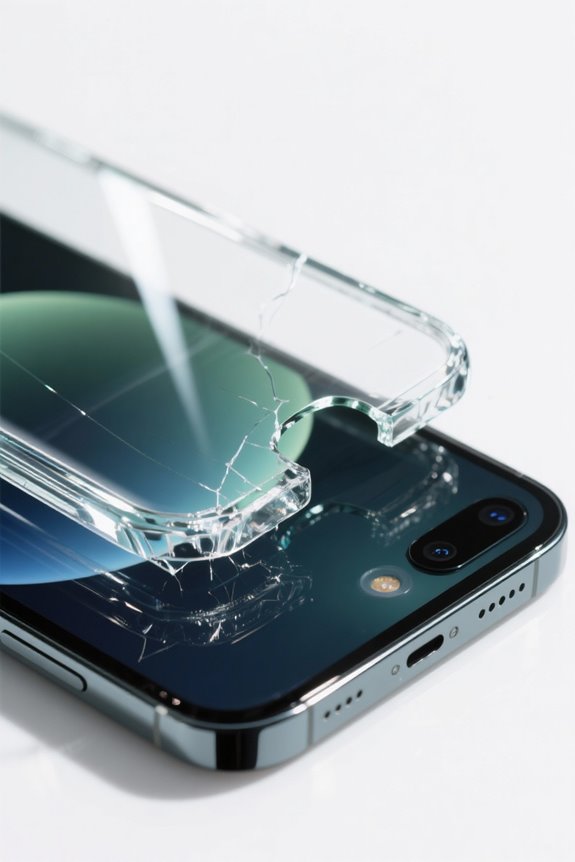
When electronic devices face the harsh realities of daily use, effective impact protection becomes essential. Tempered glass screen protectors function by absorbing and dispersing shock from impacts, considerably reducing the risk of damage, such as cracks or scratches, on the phone’s underlying screen. When force strikes the protector, the tempered glass spreads stress across a larger area, decreasing the likelihood of harm. Remarkably, this rigid design allows it to endure substantial impact energy; it often shatters upon impact rather than transferring energy to the device. However, micro scratches on the protector’s surface can compromise its protective capacity. As a result, regular inspections are critical to ascertain tempered glass maintains its robust defense against everyday wear and tear, a necessity for modern devices. Military-grade tempered glass, like that from ESR and UltraGlass, ensures superior defense against drops and includes shock-absorbing technologies.
Benefits of Using Tempered Glass
Using a tempered glass screen protector presents numerous advantages that can greatly enhance device longevity and performance. These protectors provide exceptional scratch resistance, safeguarding screens from sharp objects and everyday wear. Their construction absorbs and distributes impact force during accidental drops, considerably reducing the risk of cracks and shattering. Additionally, the oleophobic coating repels fingerprints and smudges, simplifying cleaning and maintaining visibility. Measuring between 0.3 mm and 0.5 mm, tempered glass protectors deliver a balance between robust protection and touch sensitivity. By acting as an added layer of defense, they help prevent both cosmetic and functional damage, ultimately extending the lifespan of the device. Regularly utilizing these protectors is a practical investment in safeguarding one’s technology. Many 9H tempered glass protectors offer edge-to-edge coverage, which includes protection for the vulnerable corners and edges of devices.
Scratch Resistance Explained

Scratch resistance is an essential feature for anyone looking to protect their device. Tempered glass screen protectors are engineered from heat-treated glass, achieving a hardness rating of 9H on the Mohs scale, making them highly durable against everyday items like keys or coins. This remarkable scratch resistance offers maximum protection, effectively preventing scratches that could mar the original screen. Unlike regular glass, which can easily show wear, a tempered glass protector acts as a robust barrier, notably prolonging the screen’s pristine condition. In addition, many protectors feature an oleophobic coating that repels oil and fingerprints, further ensuring a clear surface. By using a tempered glass protector, users can maintain the integrity and visual appeal of their devices for longer. Additionally, many products utilize 9H tempered glass for high durability and shatterproof capabilities, making them an excellent choice for comprehensive device protection.
Impact Absorption and Distribution

Impact absorption is an essential feature of tempered glass screen protectors, greatly enhancing device longevity. These protectors are engineered to absorb and distribute impact energy, reducing the force transmitted to the device screen during accidental falls. Their rigidity allows tempered glass to spread impact over a larger area, which minimizes localized stress that may result in cracks or shattering. Upon impact, if the tempered glass breaks, it often indicates successful energy absorption, keeping the device screen intact. Additionally, the fracture toughness of tempered glass considerably outperforms regular glass and plastic alternatives, providing superior protection. However, users should regularly inspect for micro scratches, as these imperfections may compromise the protector’s durability and effectiveness over time. Military-grade 9H hardness ensures optimal scratch resistance and durability, making it a preferred choice for safeguarding devices.
Comparison With Plastic Screen Protectors
While both tempered glass and plastic screen protectors serve the primary function of safeguarding device screens, their performance and durability greatly differ. Tempered glass is thicker and boasts superior impact resistance, effectively absorbing and distributing shock from drops. In contrast, plastic protectors allow localized stress to transfer directly to the screen, resulting in potential damage. Additionally, glass protectors typically have a scratch resistance rating around 9H on the Mohs scale, considerably outpacing plastic options, which offer minimal protection. Furthermore, tempered glass maintains clarity and touch sensitivity better than plastic, ensuring that users do not experience distortion or degraded responsiveness. Ultimately, while plastic protectors may suffice for basic scratches, they fall short against serious impacts, making tempered glass a more reliable choice. A 9H+ hardness rating is recommended for maximum protection, providing superior scratch resistance and durability.
The Role of Thickness in Protection
Thickness plays a fundamental role in the protection offered by tempered glass screen protectors. Typically ranging from 0.3 mm to 0.5 mm, this thickness strikes a balance between impact resistance and touch sensitivity. A thickness of at least 0.3 mm is vital for guarding against scratches and minor impacts, while thicker protectors can enhance durability. However, excess thickness may hinder usability by adding bulk. Significantly, the rigidity of thicker glass helps distribute impact energy across a larger area, minimizing localized stress during drops. This design feature guarantees better protection for smartphone screens, aligning with user expectations for both safety and functionality. Consequently, choosing the right thickness is essential for peak performance in real-world scenarios. Many screen protectors maintain high-definition clarity and touch sensitivity despite their thickness, ensuring that users do not compromise on screen visibility and responsiveness.
Coatings and Their Protective Features
Coatings on tempered glass screen protectors serve multiple essential functions that enhance user experience and screen longevity. The oleophobic coating effectively repels fingerprints, oils, and smudges, simplifying maintenance and preserving clarity. Additionally, the anti-glare coating considerably reduces reflections, making screens easier to read in bright environments. Many screen protectors boast a scratch-resistant coating, with some achieving a hardness rating of 9H. This high rating indicates the product’s robust protection against daily abrasions from items like keys and coins. Moreover, an anti-shatter coating guarantees that, if breakage occurs, the glass will crumble into small, blunt pieces, reducing injury risks. Together, these coatings provide inclusive protection that is both practical and aesthetically beneficial. High-quality phone cases often incorporate additional features like camera protection and stands, providing comprehensive protection for your device.
Installation Tips for Maximum Effectiveness
A successful installation of a tempered glass screen protector can greatly enhance its effectiveness and lifespan. First, adhere to critical installation tips: thoroughly clean the device screen with a lint-free cloth and safe cleaning solution, removing dust and oils for strong adhesion. Next, align the tempered glass carefully with the screen edges and camera cutouts to avoid misalignment, which can lead to bubbles beneath. Once positioned, gently press down in the center to spread the adhesive outward, eliminating air bubbles for a secure bond. Finally, allow the screen protector to settle for at least 24 hours before using a case. This will guarantee the adhesive forms a robust layer of protection to effectively protect your screen from potential damage. For optimal results, consider using auto-alignment technology found in some installation kits, which aids in precise positioning and reduces the likelihood of errors during the process.
Maintenance of Tempered Glass Screen Protectors
Although many users appreciate the protection offered by tempered glass screen protectors, proper maintenance is essential to ensuring their long-term effectiveness. Regular inspections for scratches or cracks are vital; visible damage can indicate a need to replace the protector. Maintaining the surface is equally important: users should clean it with a microfiber cloth and a compatible cleaning solution to preserve clarity and touch sensitivity. Avoid harsh chemicals or abrasive materials, as these can degrade the protector’s finish. In addition, proper alignment during installation is necessary to prevent air bubbles, which may hinder functionality. By adhering to these maintenance practices, users can maximize the protection offered by their tempered glass screen protectors, extending their lifespan and overall performance. Ceramic screen protectors, for example, offer advanced materials that enhance optical clarity and reduce glare.
Common Misconceptions About Tempered Glass
Misunderstandings about tempered glass screen protectors can lead to confusion among users regarding their features and effectiveness. Some believe these screens are unbreakable, yet they are designed to shatter upon extreme force, protecting the underlying display. Many users think that all screen protectors come with equal protection; however, tempered glass is thicker and more resilient than plastic options. Another misconception is that a glass protector is likely to reduce display clarity or touch sensitivity. In reality, modern designs maintain high transparency and responsiveness. Additionally, the installation process is straightforward, often accompanied by user-friendly instructions. Properly installed, screen protectors do not cause devices to overheat, ensuring efficient cooling and peak functionality to effectively protect your phone.
Final Thoughts on Device Protection
Ensuring device protection is essential for maintaining the longevity of smartphones and tablets. Tempered glass screen protectors play a critical role in safeguarding a device’s screen from damage. They absorb and distribute shock during falls, minimizing risks of cracks and scratches. Regular use of such protectors not only averts expensive repairs but also allows for ideal screen clarity, thanks to their oleophobic coating that repels fingerprints. For maximum effectiveness, proper installation is crucial, as misalignment can hinder protection capabilities. Ultimately, investing in a high-quality tempered glass protector enhances device life, contributing to fewer replacements and less electronic waste—a win-win scenario for users and the environment alike. Protect your device and make informed choices.
Frequently Asked Questions
Do Tempered Glass Screen Protectors Actually Help?
Tempered glass screen protectors indeed help, showcasing superior durability compared to alternatives. User experiences highlight a straightforward installation process and notable cost effectiveness, ultimately reducing repair expenses while enhancing device longevity and performance during everyday use.
What Are the Disadvantages of Tempered Glass Screen Protectors?
Like a fragile shield, tempered glass screen protectors offer scratch resistance and some impact protection, but they face durability concerns with micro scratches and adhesive quality issues, forcing replacements despite retaining the phone’s original display integrity.
Can You Actually Tell Tempered Glass From Regular Glass?
Distinguishing tempered glass from regular glass involves comparing types based on visual differences, durability metrics, and glass treatments. Tempered glass typically exhibits superior strength and clarity, while standard glass shows increased vulnerability to scratches and shattering.
What Is the Science Behind Tempered Glass?
In a furnace’s embrace, tempered glass transforms—its heat treatment process granting it remarkable impact resistance properties. This manufacturing art yields safety glass advantages, creating an invisible shield against life’s unpredictable blows, preserving beauty and function alike.