As an Amazon Associate, we earn from qualifying purchases. Some links on this site are affiliate links at no extra cost to you. Our recommendations are based on thorough research and editorial judgment.

Car Charger Safety: Voltage Protection and Automotive Standards

Car charger safety requires effective voltage protection and strict adherence to automotive standards. For instance, Level 2 chargers operate at 240 volts and should use circuit breakers rated 125% above their output. Compliance with standards like IEC 61851 guarantees safe connections, while certified charging equipment minimizes hazards. Insulation in cables prevents electrical shocks, and Ground Fault Circuit Interrupters (GFCIs) detect faults. Regular inspections are vital for maintaining these safety measures, securing reliable and efficient charging experiences. Further insight on specific practices is essential.
Key Takeaways
- Voltage protection is essential in EV chargers, utilizing circuit breakers rated at 125% of the charger’s output to prevent overloads and ensure safety.
- Compliance with automotive standards, like IEC 61851 and NEC Article 625, is crucial for preventing electrical hazards in charging installations.
- Approved charging equipment must be certified to mitigate risks associated with compatibility issues and ensure user safety during operation.
- Insulation in charging cables protects against electrical shocks, while circuit breakers safeguard against overloads and faults to reduce fire risks.
- Regular inspections and adherence to standards enhance the operational safety of EV charging systems, ensuring reliable performance and user protection.
Understanding Voltage Protection in EV Chargers
You may be interested


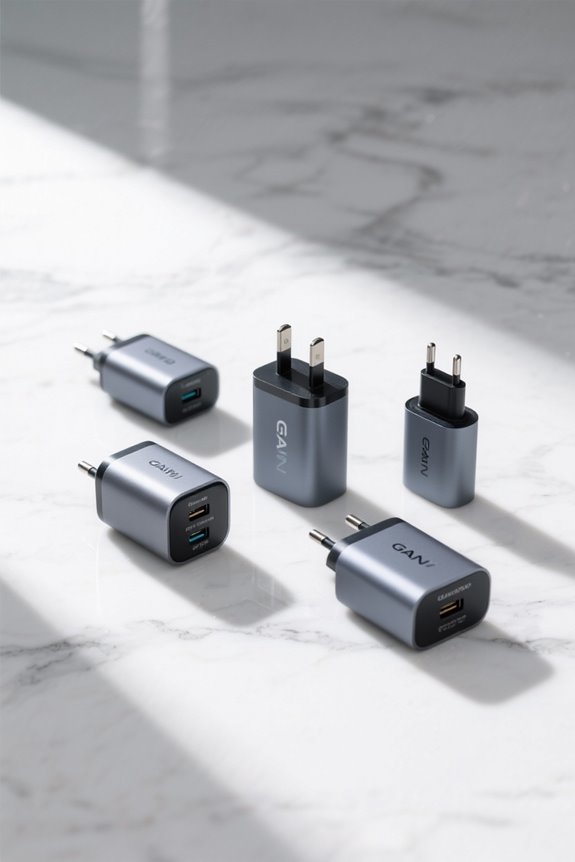
Understanding voltage protection in electric vehicle chargers is essential for anyone interacting with this technology. Electric Vehicle Supply Equipment (EVSE) must adhere to safety standards, including NEC regulations. For example, Level 2 chargers operate at 240 volts and require circuit breakers that can handle at least 125% of the device’s output. Meanwhile, DC fast chargers, which can reach up to 800 volts, utilize advanced protection such as Residual Current Devices (RCDs) to detect any leakage currents, ensuring electrical safety. Battery Management Systems (BMS) play a pivotal role by monitoring voltage during charging and discharging, guarding against overvoltage situations. Proper installation and maintenance practices enhance voltage protection, safeguarding both users and electrical infrastructure from potential hazards. USB-C wall chargers, like those from renowned brands such as Anker and WOTOBEUS, also incorporate robust safety features like overcurrent protection to prevent electrical mishaps.
Recommended Products

【Top-Flight Performance 】The 51.2V 100Ah liFePO4 battery is manufactured by 16Pcs Automotive Grade A grade prismatic cells with higher energy density, more stable performance & greater power. And has a compact 5.12kWh energy, which is equivalent to 4pcs 12V 100Ah LiFePO4 batteries in 4S (or even 8pcs 12V 100Ah AGM batteries in 8S).

[All-in-One Home & RV Energy Hub] Boasting a massive 7.2kWh capacity and 6000W AC output, the F7200 drives 99.9% of heavy-duty appliances, including central ACs, pumps, and dryers. One unit handles what others need two for—the ultimate whole home battery backup

Expand Your Backup Capacity: Add B6000 Battery Module to extend E10 from 6kWh to 90kWh total. Each 6kWh module adds 1 day of essential backup. Stack up to 5 modules per E10 (30kWh max). Triple systems reach 90kWh for 15-day backup.
Importance of Adhering to Automotive Standards

While it might seem optional, adhering to automotive standards is vital for the safety and efficiency of electric vehicle (EV) charging systems. Standards like IEC 61851 and the National Electrical Code (NEC) Article 625 establish essential guidelines that help prevent electrical hazards associated with car charger installations. These regulations guarantee a secure connection between vehicles and charging stations, enhancing compatibility across various manufacturers. Furthermore, compliance with ISO 15118 facilitates efficient energy management and user safety by providing reliable communication. By following IEC standards, charging connectors become standardized, thereby reducing the potential for electrical faults during operation. Overall, these safety measures greatly improve user safety, making adherence not just advisable but necessary for anyone involved in EV charging systems. Additionally, incorporating over-voltage protection in car chargers can further safeguard against excessive voltage, enhancing the overall safety of charging operations.
Approved Charging Equipment: Ensuring Safety

Approved charging equipment plays an essential role in guaranteeing safety during electric vehicle (EV) charging. This equipment must be certified by a Nationally Recognized Testing Laboratory, which assures adherence to safety standards and reduces hazards. Using only manufacturer-provided or approved charging cables is fundamental for mitigating compatibility issues, thereby promoting safety. Following NEC Article 625 guidelines guarantees that charging installations comply with safety requirements for both AC and DC systems. Additionally, adequate breakers must be installed, rated to handle the expected load; for example, a 50-amp charger requires at least a 70-amp circuit for safe operation. Regular inspections for visible damage and confirming installations can manage high currents are critical for maintaining operational safety and efficiency in EV charging. Ensuring that multi-device support is available in charging stands can enhance convenience and efficiency, similar to the benefits seen in phone stands with chargers.
Recommended Products
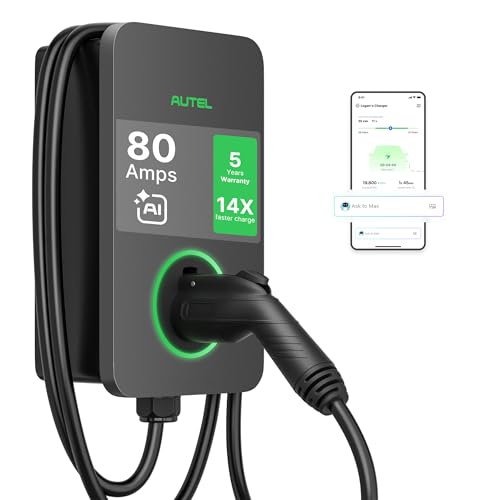
AI-POWERED SMART CHARGING & APP CONTROL – This ev charger level 2 uses Autel’s AI-integrated smart app to schedule charging around time-of-use utility rates, helping lower your monthly bill while boosting station utilization. Start or stop sessions remotely, adjust current from low to high amps, view real-time energy data, and get alerts if anything looks off.
9× FASTER CHARGING: Get faster, smarter EV charging up to 11.5 kW (up to 46 miles/hour). Perfect for overnight charging or quick top-ups.

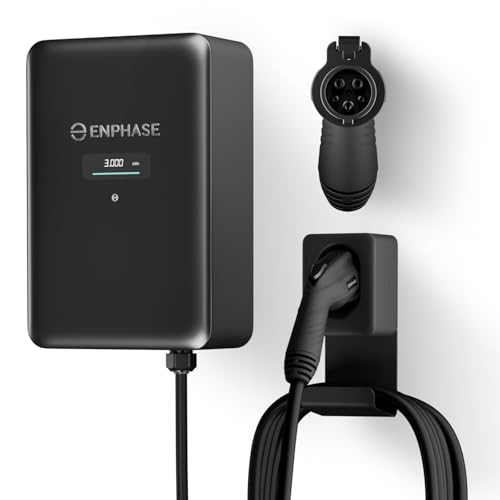
INSTALL WITH CONFIDENCE: The Enphase HCS-50 EV Charger, formerly known as ClipperCreek, delivers award-winning durability and reliability. Installation is quick and straightforward—connect it to a dedicated 50 Amp circuit by any licensed electrician.
The Role of Insulation and Circuit Breakers

Insulation and circuit breakers are integral components in the safe operation of electric vehicle (EV) charging systems. Proper insulation in charging cables prevents electrical shocks and short circuits, protecting high-voltage parts from moisture. Circuit breakers are crucial, as they interrupt electrical flow during overloads or fault conditions, reducing fire risks. According to the National Electrical Code, circuit breakers must be rated at 125% of a charger’s output to guarantee safety under maximum load. Additionally, Ground Fault Circuit Interrupters (GFCIs) are crucial, detecting ground faults to prevent electric shock. Regular insulation resistance testing is recommended to verify insulation integrity, identifying potential wear or damage, thereby adhering to established safety standards and enhancing overall electrical safety in EV charging systems. A power bank with overcharge protection is essential for secure charging, ensuring devices and users remain safe from electrical hazards.
Regular Inspections: A Key to Safety

Regular inspections are essential for guaranteeing the safety and reliability of electric vehicle (EV) charging systems. These inspections involve checking charging equipment, including cables and connectors, for visible damage and verifying connectors remain clean and dry. Compliance with safety standards, as outlined in the National Electrical Code (NEC) Article 625, mandates regular maintenance checks of charging devices to reduce the risk of electrical faults. Additionally, circuit breakers should be rated at least 125% of the charging device’s output to provide adequate voltage protection. Routine safety checks not only help maintain peak performance but also support the longevity of battery health during the charging process. Such diligence can prevent future hazards and guarantee safe charging experiences for all users. It’s important to choose charging stations with integrated cable management to ensure that cables remain organized and reduce potential hazards during inspections.
Mitigating Risks in High-Voltage Connections
When dealing with high-voltage connections in electric vehicles (EVs), safety should always take precedence. Operating between 100 to 800 volts, these connections require stringent safety measures to mitigate electric shock and thermal hazards. Voltage protection is critical, governed by standards such as IEC 61851, which mandates the use of Residual Current Devices (RCDs) to interrupt leakage currents. Additionally, effective Battery Management Systems (BMS) continuously monitor battery health, ensuring safe operation by preventing thermal runaway. Markings like orange insulation on high-voltage cables signal heightened risk, emphasizing essential handling protocols. Compliance with automotive standards, including ISO 26262 and NHTSA regulations, is crucial for minimizing risks during both operation and maintenance, ensuring that high-voltage systems function safely and effectively. The durability and construction of adapters used in these systems are crucial for ensuring long-term reliability and safety under frequent use.
Recommended Products

Dual Charging on a Single Circuit: Charge two EVs simultaneously with the HCS-D40’s dual-port design, delivering 32 Amps to one vehicle or 16 Amps to two vehicles, minimizing the need for costly electrical upgrades.

INSTALL WITH CONFIDENCE: Formerly ClipperCreek, the core technology that comes inside every Enphase EV charger has earned its award-winning reputation by delivering industry-leading durability and reliability. Now they're made even better with a 5-year limited manufacturer warranty and 24/7 customer support. This HCS-80 hardwired home EV charger comes fully assembled and offers quick installation to a dedicated 80 Amp circuit with any licensed electrician.

【Compatible Vehicles】 This Tesla V2L discharge power share device is specifically designed for Tesla Tesla Model Y/3/S/X manufactured after January 2020 with a factory-installed CCS2 charging port.
Optimizing Vehicle Performance Through Safe Charging
Maximizing vehicle performance through safe charging requires a thoughtful approach to how electric vehicles (EVs) are energized. Using chargers that comply with IEC 61851 meets essential safety requirements, promoting stable energy transfer and enhancing battery health. Employing Mode 3 charging—with Electric Vehicle Supply Equipment (EVSE) that includes residual current protection—ensures a higher voltage supply safely. Connectors adhering to IEC 62196 standards guarantee compatibility, which facilitates efficient connections between vehicles and charging stations. Continuous monitoring through specific communication protocols, like ISO 15118, supports safe and effective charging sequences, ultimately enhancing EV operations. Many EVs also benefit from fast charging capabilities that reduce downtime, similar to those found in portable power banks, further enhancing user experience. By prioritizing these safety measures, drivers can considerably impact ideal vehicle performance, preventing overheating and voltage fluctuations that undermine the reliability and longevity of their electric vehicles.
Recommended Products
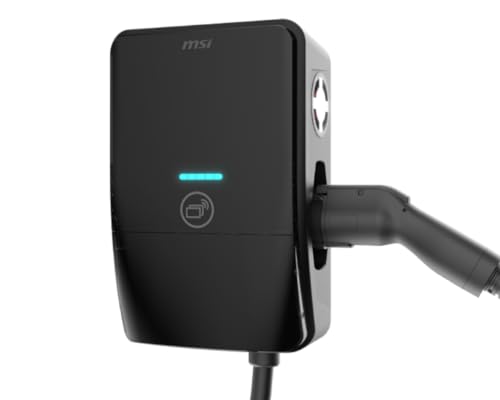

EFFICIENT LEVEL 1 CHARGING - With a NEMA 5-15 plug and 15 Amp output, this charger delivers reliable and efficient Level 1 charging, adding approximately 40-50 miles of range overnight

✅【Fast & Adjustable Charging Power – Up to 7.68kWh, 16A–32A Output】This Level 2 portable EV charger delivers up to 32A and 7.68kWh for fast, efficient charging. Easily adjust current based on your home circuit: 32A for 40A, 24A for 30A, or 16A for 20A breakers. Simply long-press the “A” button to change amperage when pluged in,You can easily adjust the current (16A/24A/32A) to match your home circuit — no electrician required.
Frequently Asked Questions
What Protection Is Required for EV Chargers?
EV chargers require overcurrent protection devices, grounding measures, and adherence to wiring standards. Surge protection methods and thermal management systems enhance safety, while regular charging station durability assessments and connector safety checks guarantee reliable installation and maintenance.
Are Car Chargers Required to Have GFCI Protection?
GFCI safety is mandated for outdoor chargers under strict installation guidelines, contrasting with indoor units. Ensuring adherence to charger regulations and electrical standards enhances user education, equipment compatibility, and alleviates environmental concerns associated with automotive charging risks.
What Is the SAE Standard for EV Charging?
The SAE standards for EV charging, including J1772 and J2836, outline electrical safety, connector specifications, and power levels, ensuring vehicle compatibility, charging efficiency, and a robust charging infrastructure that adheres to industry regulations and user guidelines.
What Is the ISO Standard for EV Chargers?
ISO standards for EV chargers, particularly ISO 15118, establish international guidelines for communication between electric vehicles and charging stations, ensuring safety regulations, performance testing, and compatibility to enhance infrastructure development and industry certification.