As an Amazon Associate, we earn from qualifying purchases. Some links on this site are affiliate links at no extra cost to you. Our recommendations are based on thorough research and editorial judgment.


Liquid Vs Tempered Glass: Which Screen Protection Method Works Better?

Liquid screen protectors use a silicone dioxide-based nano-coating, enhancing scratch resistance with a 9H hardness rating. They excel in clarity and maintain touch sensitivity but offer limited impact protection and may require frequent reapplication. On the other hand, tempered glass protectors are made of toughened glass, providing better impact resistance and easier installation without bubbles. However, they can be bulkier and may reduce touch sensitivity. Choosing between them depends on user needs and habits, and further insights await.
Key Takeaways
- Liquid screen protectors provide excellent scratch resistance but offer limited impact protection compared to tempered glass protectors.
- Tempered glass protectors excel in both scratch and impact resistance, making them ideal for heavy device users.
- Liquid protectors require careful application and reapplication over time, increasing overall costs compared to the durability of tempered glass.
- Installation of liquid protectors is simpler, avoiding alignment issues, while tempered glass may need precision to prevent air bubbles.
- Both options maintain touch sensitivity, but tempered glass may slightly affect it due to thickness and installation conditions.
What Is a Liquid Screen Protector?
You may be interested


A liquid screen protector serves as an innovative solution for safeguarding electronic displays. These protectors utilize a nano-coating made of silicone dioxide (SiO2), forming a protective layer that bonds chemically to screens. Offering an impressive hardness rating of 9H, liquid screen protectors guarantee strong scratch resistance against everyday damage. The application process is straightforward: it starts with cleaning the screen, followed by evenly spreading the liquid. After allowing it to dry for 10-15 minutes, buffing gives a smooth finish. Users will appreciate that liquid screen protectors create a hydrophobic surface, repelling water and minimizing smudges, which makes cleaning easier. They are versatile, providing protection for various devices such as smartphones, tablets, and eyeglasses, though not ideal for existing screen protectors. When considering screen protection for your devices, it’s important to note that military-grade protection cases often pair well with screen protectors to offer comprehensive device safety.
How Does a Liquid Screen Protector Work?
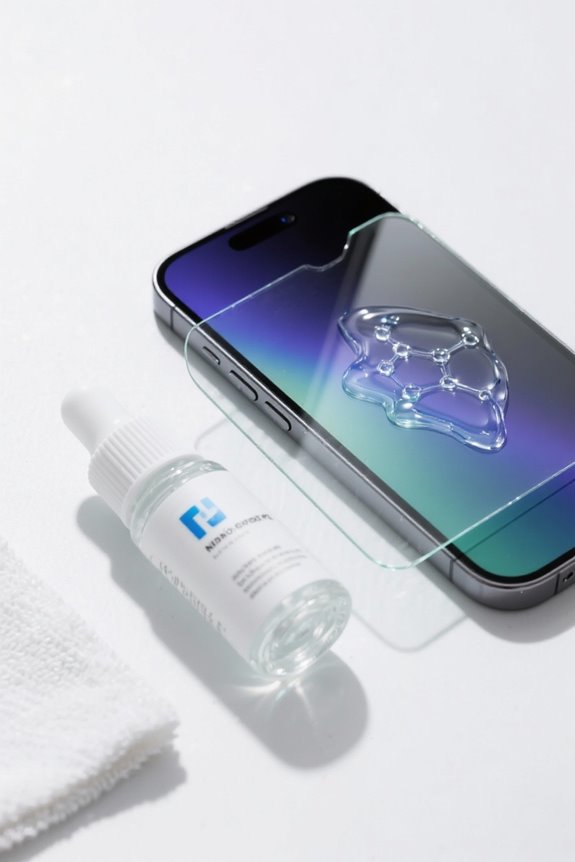
How does a liquid screen protector achieve its remarkable protective qualities? By utilizing advanced nanotechnology, a liquid screen protector introduces silicone dioxide (SiO2) to create a chemical bond with the device’s surface. This bonding enhances the screen’s scratch resistance, achieving a notable 9H hardness rating—surpassing that of standard screens. The liquid fills in microscopic imperfections, resulting in improved clarity and a smoother feel. Additionally, it forms a hydrophobic layer, effectively repelling spills and smudges, which simplifies cleaning. However, while liquid protectors excel in scratch resistance, their impact protection is comparatively limited when measured against tempered glass screen protectors. For the best results, users should adhere to the manufacturer’s application instructions to guarantee effective coverage and longevity. Liquid screen protectors are known for their 99.99% HD clarity, offering vibrant visuals and maintaining touch sensitivity.
Advantages of Liquid Screen Protectors

Liquid screen protectors offer several advantages that make them an appealing choice for consumers seeking to enhance their device’s protection. Utilizing advanced nanotechnology, these protectors deliver impressive scratch protection with a resistance level of 9H, effectively defending against everyday wear. Their hydrophobic surfaces repel fingerprints, simplifying cleaning and maintenance. The application process is especially user-friendly; it does not involve bubbles or complicated alignment, making it accessible for all skill levels. In addition, liquid screen protectors preserve touch sensitivity, ensuring users experience the same responsiveness as before. By filling in microscopic imperfections, they also enhance the display’s clarity. Universal compatibility means they can be used on various devices, including smartphones, tablets, and eyeglasses, providing extensive protection across multiple screens. For those looking to connect devices, ensure OTG functionality for seamless compatibility with your tech peripherals.
Disadvantages of Liquid Screen Protectors

Numerous disadvantages accompany the use of liquid screen protectors, which can deter potential buyers. One significant issue is their limited impact protection, as they do not safeguard devices from major drops as effectively as tempered glass alternatives. Moreover, the longevity of liquid screen protectors can diminish based on various usage conditions, requiring more frequent reapplications in harsher environments. They also tend to involve higher initial costs when compared to traditional options, which may dissuade budget-conscious consumers. Additionally, maintenance due to wear is essential, as these protectors are susceptible to dirt and oil, leading to potential decolorization over time. As a result, proper application and upkeep are vital for maximizing their protective capabilities. In contrast, 9H tempered glass offers excellent scratch and impact resistance, providing a more durable and reliable option for those seeking long-lasting screen protection.
What Is a Tempered Glass Screen Protector?
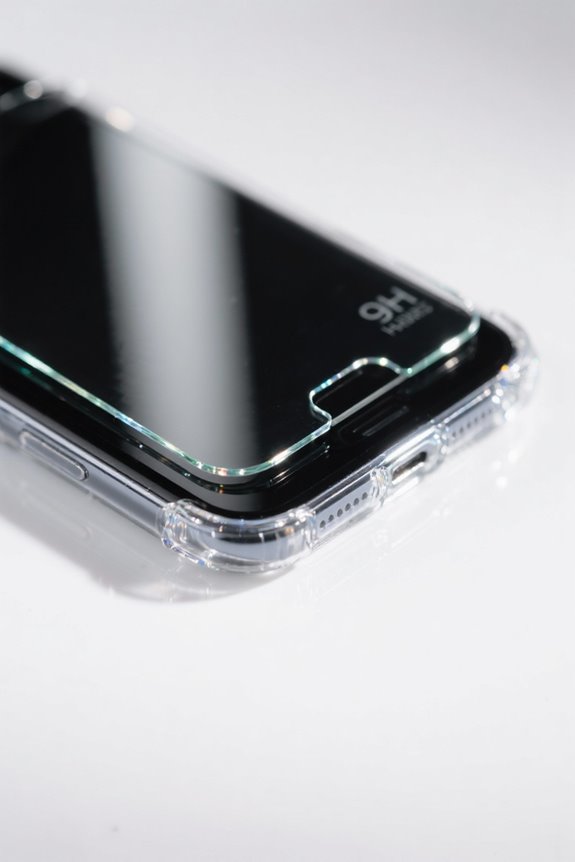
Tempered glass screen protectors stand out as a robust alternative for mobile device users seeking reliable safeguards against damage. These protectors are made from toughened glass that undergoes a heating and rapid cooling process, rendering them five times stronger than standard glass. Rated 9H on the Mohs scale, their hardness rating indicates exceptional resistance to scratches and minor impacts. This is why tempered glass protectors are preferred for their durability and superior impact protection, effectively shielding devices from drops and cracks. Additionally, high-quality tempered glass maintains HD clarity, ensuring that visuals remain sharp and vibrant. Easy installation is another advantage, often featuring pre-applied adhesive and kits that help you apply the protector without pesky bubbles. Moreover, oleophobic coatings on tempered glass help reduce fingerprints and smudges, enhancing the overall user experience.
How Does a Tempered Glass Screen Protector Work?
A high-quality tempered glass screen protector functions through advanced engineering techniques that enhance its protective capabilities. This type of screen protector is crafted by heating regular glass to high temperatures and then cooling it rapidly, greatly increasing its strength—up to five times stronger than standard glass. It possesses a hardness rating of 9H on the Mohs scale, offering superior resistance against scratches from everyday items like keys and coins. Furthermore, the rigid structure of tempered glass absorbs impacts, minimizing the risk of shattering, which helps protect your phone during drops. Additionally, many tempered glass protectors maintain high clarity for best viewing and come with easy-application kits, reducing errors and ensuring a flawless installation for users. 9H hardness is a key feature that distinguishes high-quality protectors, providing exceptional scratch and impact resistance.
Advantages of Tempered Glass Screen Protectors
While many phone users seek reliable protection for their devices, choosing a tempered glass screen protector presents a compelling option. Rated at 9H hardness, these protectors provide exceptional scratch resistance against sharp objects. Tempered glass is five times stronger than standard glass, effectively absorbing impacts from drops. With a thickness of about 0.5mm, it offers robust protection while maintaining high touch sensitivity, allowing for seamless interaction. Additionally, tempered glass shields screens from dust and grime, ensuring excellent clarity and transparency for a superior viewing experience. Most glass protectors come with easy-application kits, complete with alignment tools, minimizing the risk of air bubbles and enabling smooth application—an important consideration for maintaining screen integrity and aesthetics. The auto-alignment technology in some installation kits further enhances the precision of the application process.
Disadvantages of Tempered Glass Screen Protectors
Despite the many advantages of tempered glass screen protectors, several notable disadvantages warrant consideration. One key drawback is their thickness, typically around 0.5mm, which can make devices feel bulkier and less aesthetically pleasing. While tempered glass excels at preventing scratches, it can diminish touch sensitivity under certain conditions, potentially leading to frustration. Furthermore, if cracks develop, these protectors are prone to breakage, necessitating more frequent replacements than users might anticipate. Installation challenges exist as well; achieving bubble-free, aligned application requires significant precision. Finally, over time, tempered glass may not maintain its clarity as effectively as liquid protectors, impacting the display’s visual appeal. Users seeking military-grade shatterproof protection should consider high-quality tempered glass options for better durability. Evaluating these pros and cons helps users make informed decisions about screen protection.
Liquid Screen Protectors vs. Tempered Glass Screen Protectors: Key Differences
When evaluating screen protection solutions, understanding the differences between liquid and tempered glass screen protectors is essential for informed decision-making. Liquid screen protectors employ nano technology, chemically bonding with the device screen, while tempered glass consists of a solid 9H hardness-rated sheet offering superior impact protection. Their application methods also differ: liquid protectors require cleaning and buffing, while tempered glass needs careful alignment to avoid air bubbles. Both types maintain touch sensitivity, but liquid screen protectors are thinner and less noticeable. However, they may necessitate more frequent reapplications and offer limited scratch resistance compared to the durable clarity provided by tempered glass, which requires minimal maintenance and excels in physical protection. Additionally, oleophobic coatings on tempered glass protectors resist fingerprints, keeping the screen cleaner over time.
Which Offers Better Drop Protection?
Understanding which type of screen protector offers superior drop protection is essential for anyone concerned about device durability. Tempered Glass Screen Protectors excel in this area, thanks to their thickness and rigid structure. With a hardness rating of 9H, they effectively reduce the risk of screen cracks upon impact. This level of protection is considerably higher than that provided by liquid screen protectors, which primarily enhance scratch resistance. While liquid protectors may guard against minor falls, they offer limited impact protection, often failing during more substantial drops. Consequently, users looking for reliable drop protection should prioritize tempered glass, especially in environments where drops are a common risk, ensuring their devices remain safe and intact. In addition to screen protectors, utilizing adjustable car mounts can enhance device safety while driving, offering features like 360-degree rotation and strong suction for stable phone placement.
Application Process: Liquid vs. Tempered Glass
How do the application processes for liquid and tempered glass screen protectors differ? The application process for liquid screen protectors begins with cleaning the device’s screen, followed by applying the nano liquid using a microfiber cloth. After about 10-15 minutes of drying time, buffing the surface guarantees smoothness. On the other hand, tempered glass protectors utilize an adhesive side for easy placement. They come with alignment stickers, reducing the chance of air bubbles during installation. While liquid protectors require careful application to avoid messiness, tempered glass offers immediate protection upon placement. Adhering to installation instructions is vital for both methods, guaranteeing ideal results and longevity of the screen protection.
Compatibility and Sensitivity Considerations
Screen protection compatibility and sensitivity are essential factors for maintaining the functionality of devices. Liquid protectors are generally compatible with a wide range of smartphones, tablets, and wearables. However, they should not be applied over existing screen protectors due to adhesion issues. In contrast, tempered glass protectors require precise sizing for specific models, which can hinder compatibility. Both options aim to preserve touch sensitivity, but liquid protectors often provide a smoother feel due to their ultra-thin design. Users frequently report that liquid protectors enhance tactile experiences by filling in surface imperfections. Hence, it is important to double-check product compatibility for both methods, as improper fits can compromise protection and overall device functionality.
Cost Comparison: Liquid vs. Tempered Glass
When evaluating the costs associated with liquid and tempered glass screen protectors, several key factors come into play. Liquid screen protectors typically cost around $25 for a single application. Conversely, tempered glass options can often be found in packs for under $20. While liquid protectors may seem economical initially, they often require more frequent reapplications due to wear. This can lead to higher overall expenses over time. In contrast, tempered glass offers superior long-term value, providing excellent impact and scratch protection. Their affordability encourages users to replace them without financial strain if damage occurs. Hence, when considering a cost comparison, tempered glass often emerges as the more prudent investment for lasting protection against damage.
User Experience: Touch Sensitivity and Clarity
User experiences with screen protectors often hinge on two pivotal factors: touch sensitivity and clarity. Both tempered glass and liquid screen protectors aim to maintain high touch sensitivity, enabling seamless device interactions without noticeable delay. Tempered glass offers a smooth surface that closely mimics the original screen feel, and therefore enhancing user experience. Conversely, liquid screen protectors present an ultra-thin layer that retains high touch responsiveness, allowing for tactile feedback similar to bare screens. Clarity remains high in both options. Tempered glass excels with exceptional display quality resistant to yellowing, while liquid protectors maintain transparency, though they may attract dust and smudges over time. Users’ preferences dictate their choices in tactile feel and visual quality between the two methods.
Final Thoughts on Choosing the Right Protector
How does one navigate the often overwhelming decision of which screen protector to choose? When weighing a Liquid Screen Protector versus Tempered Glass, users should consider protection methods based on individual needs. Tempered Glass, with its impressive hardness rating of 9H, offers superior impact resistance, making it the ideal choice for those prone to drops. In contrast, liquid options provide remarkable scratch resistance but may last only six months. Furthermore, installation is easier with tempered glass; its kits minimize the risk of air bubbles. For individuals seeking a discreet look while keeping touch sensitivity intact, a Liquid Screen Protector is appealing. Ultimately, understanding these distinctions helps users make an informed decision tailored to their lifestyle and device usage. Choose wisely!
Frequently Asked Questions
Is Liquid Screen Protector Better Than Tempered Glass?
Is liquid screen protector truly superior? While it offers installation ease and low cost, its durability pales compared to tempered glass’s clarity and robustness, making its protection level inadequate for significant impacts.
What Are the Disadvantages of Liquid Screen Protectors?
The disadvantages of liquid screen protectors include durability concerns, application difficulties, longevity issues requiring frequent reapplications, and resistance limitations against severe scratches and major drops, making them less effective than sturdier options like tempered glass.
What Type of Screen Protector Is Best?
In choosing a screen protector, one must weigh the pros and cons like balancing a scale. Tempered glass excels in durability and cost-effectiveness, while liquid options shine in installation ease and fingerprint resistance, making personal preference essential.
Which Is the Best Screen Protector Gel or Tempered Glass?
In the gel durability comparison, tempered glass advantages emerge prominently. While application process differences favor gel ease, a cost analysis debate favors tempered glass for frequent replacements, making it a practical choice for robust protection.