As an Amazon Associate, we earn from qualifying purchases. Some links on this site are affiliate links at no extra cost to you. Our recommendations are based on thorough research and editorial judgment.


Inductive Charging Efficiency: Energy Loss in Wireless Power Transfer

Inductive charging typically achieves efficiency rates between 70% and 90%. Energy loss occurs primarily during the AC-to-DC conversion process and results from factors like coil distance and alignment. For instance, misalignment can greatly hamper charging speed. External conditions, such as protective cases, can also interfere, contributing to energy loss. Furthermore, heat generation during charging exacerbates inefficiency. Advances in technology are addressing these issues, suggesting better performance on the horizon. To understand more about these variations, keep exploring the topic.
Key Takeaways
- Inductive charging efficiency ranges from 70% to 90%, with newer systems achieving closer to 90% efficiency.
- Energy loss primarily occurs during AC to DC conversion, resulting in heat generation.
- Coil misalignment and distance between the transmitter and receiver coils significantly impact energy transfer efficiency.
- Factors like ambient temperature, protective cases, and nearby electronic devices can interfere with wireless energy transfer.
- Strategies to improve efficiency include maintaining coil alignment, using high-power chargers, and optimizing charging parameters through software updates.
What Is Inductive Charging?
You may be interested


Inductive charging, often regarded as a modern innovation in power transfer, employs electromagnetic induction to facilitate wireless energy transfer. This process involves a transmitter coil in the charger generating an oscillating magnetic field through alternating current. A receiver coil within the device then captures this energy, converting induced alternating current into direct current for charging. Despite its conveniences, efficiency rates for inductive charging typically range from 70% to 80%, although newer models can achieve nearly 90% efficiency under ideal conditions. However, energy loss primarily occurs as heat, influenced by factors such as coil misalignment. Ensuring proper alignment and proximity between the coils is essential for maximizing energy transfer and reducing loss, highlighting a critical component in efficient inductive charging systems. Fast charging technologies can deliver outputs up to 30W, significantly reducing overall charging time and improving user satisfaction.
How Does Inductive Charging Work?
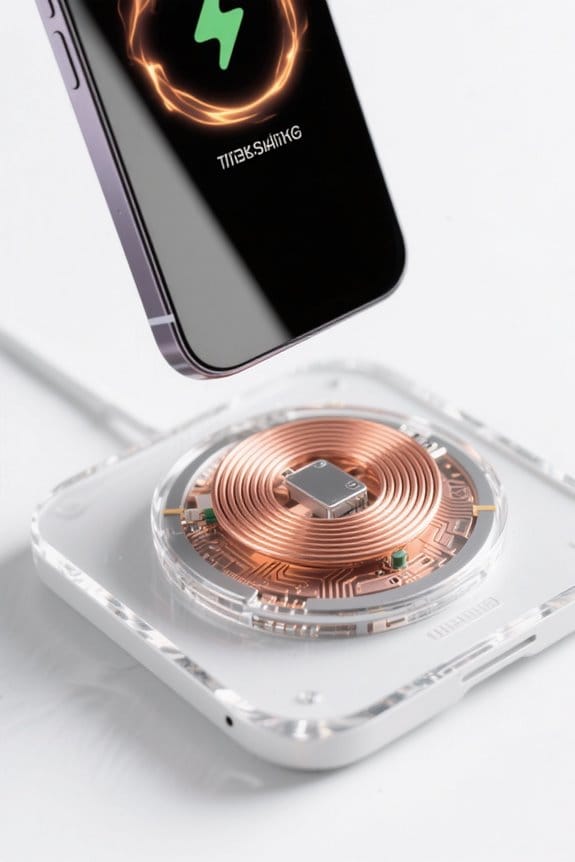
Wireless energy transfer leverages a sophisticated technique known as electromagnetic induction, allowing devices to charge without the need for traditional connectors. In this process, a transmitter coil generates an oscillating magnetic field using alternating current (AC). This magnetic field induces voltage in a nearby receiver coil, enabling energy transmission. The AC current produced in the receiver coil is then converted to direct current (DC) to charge the device’s battery effectively. Charging efficiency often varies between 70% and 90%, influenced by factors such as coil design and alignment. Misalignment can considerably hinder inductive power transfer, resulting in energy loss, primarily as heat. Hence, ideal charging occurs with precise alignment between the coils, ensuring maximum energy efficiency. It is crucial to consider safety certifications like UL certification when using inductive charging technology to ensure adherence to safety standards.
How Efficient Is Inductive Charging?

When evaluating the efficiency of charging processes, it is crucial to recognize that inductive charging generally operates at efficiency rates ranging from 70% to 80%. In contrast, traditional wired charging achieves higher efficiency levels, typically between 90% and 95%. This disparity indicates a noticeable energy loss during inductive charging, primarily due to heat generated in the conversion process. The interaction between the transmitter and receiver coils creates resistance that results in this energy dissipation. Factors like coil alignment, the distance between the charger and the device, and protective case quality further affect efficiency. Additionally, ambient temperature influences charging dynamics, possibly reducing the system’s overall performance. Inductive charging, while convenient, often lacks the fast charging capabilities found in advanced power banks, which minimizes charging time and enhances user experience. To sum up, while inductive charging offers convenience, it comes with inherent efficiency challenges.
Recommended Products

【4000Watt Pure Sine Wave Inverter】This 4000 watt inverter pure sine wave version converts 24V DC to AC 110V 120V, ideal to install in RVs, Cars, Vessels and 24V off grid solar system, and computer, hair dryer, 2000Watt microwave and other sensitive equipment not more than 4000watt, Surge Power 7000 Watt for 2 Seconds

【POWERFUL DC-AC】This 3000 watt inverter 12V to 110V provides 3000W continuous DC to AC power, 6000W peak surge during load start-up, 12V to 120V AC pure sine wave with conversion efficiency >90%, reduces conversion loss.

【XYZ INVT Power Inverter】Reliable inverter maker for more than 11 years. Provide full 2000 watt continous power and 4000 watt peak power, change 24 volt dc to ac 120 volt, power 110v 120v ac appliances with your 24v dc battery!
Factors Affect Inductive Charging Speed
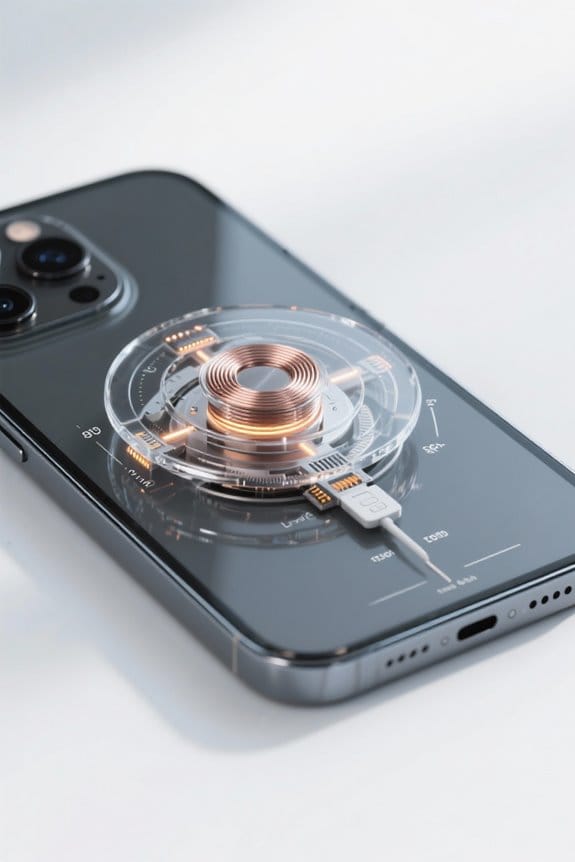
Charging speed in inductive systems is greatly affected by several key factors. The distance and alignment between transmitter and receiver coils are critical; ideal positioning enhances charging efficiency. Even slight misalignments can slow charging times considerably. Additionally, the output power of the wireless charger is pivotal; higher power rates can facilitate faster charging, provided the device supports such input. Protective cases can obstruct electromagnetic fields, thereby impeding energy transfer, so users should opt for thin, compatible cases for ideal performance. Ambient temperature also plays a role; extreme heat or cold can limit charging efficiency, emphasizing the need for a stable environment during power transfer. Understanding these factors can maximize the effectiveness of inductive charging technology. It’s also important to monitor feedback from users regarding real-world performance to understand how different factors interact in practical scenarios.
Recommended Products

LUXURIOUS LEATHER ELEGANCE: Crafted in top-grain Italian leather, these reclining sofas for living room combine lasting durability with refined softness, bringing timeless sophistication to your home

ITALIAN CRAFTSMANSHIP: Crafted from the finest Top Grain Italian Leather, this leather sectional couch offers a perfect blend of sophistication and comfort, enhancing your living space's aesthetics

MODERN 3-PIECE RECLINING SET FOR LUXURY LIVING: This power reclining sofa, loveseat, and chair set is upholstered in premium genuine leather, delivering high-end style and comfort to your living room or home theater.
Energy Loss Mechanisms in Inductive Charging
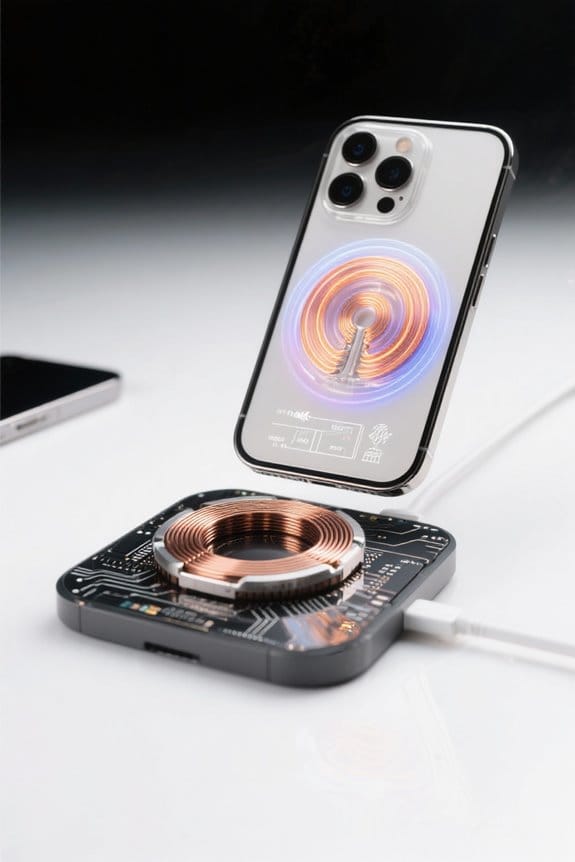
Although advancements in technology have improved the efficiency of inductive charging, energy loss remains a significant challenge. The primary contributors to energy loss include heat generated during the conversion of alternating current (AC) to direct current (DC) and inefficiencies in the electromagnetic induction process. Typical charging efficiency rates range from 70% to 80%, with newer models achieving up to 90% under ideal conditions. Distance between transmitter and receiver coils plays a critical role; greater separations often lead to increased energy loss. Additionally, precise alignment is essential as misalignment can adversely affect magnetic field interactions and extend charging times. Ambient temperature also influences performance; higher temperatures can exacerbate energy loses through heat dissipation, ultimately impacting overall charging efficiency. In the context of wireless car chargers, safety features like foreign object detection help ensure efficient energy transfer by preventing interference and potential damage.
Impact of Distance on Charging Efficiency
Energy transfer in inductive charging is greatly influenced by the distance separating the transmitter and receiver coils. As this distance increases, charging efficiency noticeably declines. Typically, wireless charging systems achieve efficiency levels between 70% and 80%. However, should the distance grow, these rates can drop below 70%. Research indicates that maintaining a distance of just a few centimeters can elevate efficiency closer to 90%, which is ideal for practical applications. In addition, greater distances exacerbate the heat loss phenomenon, leading to additional energy transfer inefficiencies. Hence, minimizing the distance between coils is essential for optimizing inductive charging performance. To summarize, both proximity and effective energy management are imperative for maximizing charging efficiency and minimizing energy loss. As a parallel to the IPX8 rated cases that provide optimal waterproof protection, maintaining minimal distances in wireless charging ensures high efficiency and reliability.
Importance of Coil Alignment
Proper alignment of the transmitter and receiver coils is essential for ensuring peak performance in inductive charging systems. Misalignment, even by a few millimeters, can reduce efficiency by up to 25%. This inefficiency is particularly problematic because it leads to significant energy loss during transfer, as the electromagnetic fields struggle to interact effectively. For inductive charging to operate efficiently, coils need to be precisely aligned to achieve efficiency rates between 70% and 90%. Additionally, devices with thick or obstructive cases may exacerbate the challenges of coil alignment, further hampering the inductive charging process. By prioritizing proper alignment, users can maximize energy transfer and minimize unnecessary heat loss, ensuring a more effective charging experience overall. An additional challenge is posed by through-case charging capabilities, which allow charging pads to support devices with cases up to 5mm thick, potentially impacting alignment and efficiency.
Recommended Products

Revolutionary Dual-Foot Deep-Stretch Technology (Patented): Notired’s advanced massage chair delivers next-level relief for your calves, feet, and ankles; Each leg can be independently stretched and massaged, offering tailored elevation and traction; Dual foot rollers and wrap-around air compression precisely targets acupressure points from heel to toe for a spa-grade , full-coverage foot therapy experience
![Detroit Axle - 4WD Front Suspension Kit for 2003-2004 Ford F-350 F-250 Super Duty 2003-2005 Excursion [8 Lugs], 2 Wheel Bearing Hubs 4 Ball Joints 4 Tie Rods 2 Sway Bar Links Replacement - 12pc Set](https://m.media-amazon.com/images/I/41KllDSxXvL._SL500_.jpg)
Wheel Bearing Hubs Kit Replacement for 2003 2004 Ford F-350 Super Duty (for Vehicles with SRW; Fine Threads - 4x4 w/ABS Only) - [2003 2004 Ford F-250 Super Duty (for Vehicles with SRW; Fine Threads - 4x4 w/ABS Only)] - 2003 2004 2005 Ford Excursion (for Vehicles with SRW; Fine Threads - 4x4 w/ABS Only)
VERSATILITY EVOLVED – With the ROG Claymore II, you can create your ideal gaming setup by placing the new detachable numpad on whichever side you prefer; then choose between wired or wireless mode and light it all up with Aura Sync. Assume full tactical control with ROG RX Optical Mechanical Switches and customizable hotkeys.
Role of Environmental Conditions
Environmental conditions play an essential role in the efficiency of inductive charging systems. Ambient temperature, for example, can greatly affect the charging process; elevated temperatures often lead to increased energy loss as heat. Additionally, high humidity can disrupt vital electromagnetic fields, further reducing charging speed and efficiency. Physical obstructions or metallic objects between the charger and device can interfere with these fields, creating barriers that impede energy transfer. Proper ventilation is necessary to prevent excessive heat buildup, which can hinder the overall effectiveness of the system. Finally, nearby electronic devices may introduce varying electromagnetic interference, altering the stability and strength of the magnetic fields, consequently impacting efficient power transfer during inductive charging. Using charging port protectors can help prevent damage from dust and moisture, ensuring that the device’s charging components remain in optimal condition for efficient power transfer.
Strategies to Improve Inductive Charging Efficiency
Optimizing inductive charging efficiency involves implementing several key strategies. Precise alignment between the charging coils is essential, as even slight misalignment can lead to significant energy loss, slowing down the charging process. Utilizing high-power chargers tailored to match the device’s maximum capacity can enhance effective energy transfer and reduce charging time. Additionally, employing thin and compatible protective cases helps improve electromagnetic interaction between the coils, minimizing interference. It is also important to maintain a ventilated charging area, as overheating often results in reduced efficiency during wireless power transfer. Finally, regularly updating device software can optimize charging parameters, ensuring that the device receives efficient power during induction charging. Ensuring model compatibility before purchasing a charger is crucial for achieving optimal performance and preventing device damage. These strategies collectively enhance overall performance and user experience in wireless charging.
Recommended Products
POWERFUL: 6000W continuous, 18000W surge for 20 seconds, 48VDC, 50 amps, 120/240 VAC split phase, pure sine clean power, low frequency, auto transfer switch and 60A smart battery charger for 8 different battery technologies including Lead, Gel, AGM, LiFePO4 and more.

【Heavy Duty Inverter Charger】10KW DC 48V Pure Sine Wave Solar Inverter, 3 times peak power, 30000W surge power.Input 240V AC, output 120/240V split phase inverter. Built-in 2 x 80A MPPT solar charger controllers and transfer switch. Low frequency inverter supports heavy household loads, workshops and off grid solar systems.WiFi-module is included,which allows users to check real-time operating status, power flow and system parameters anytime through a mobile APP

🌞🌞【Heavy Duty Inverter Charger】10000W pure sine wave inverter charger, peak 30000 watts for 20 seconds. A low frequency 48V inverter 240 split phase hybrid inverter with transformer. Input 48V DC to 240V AC, output 120/240V split-phase pure sine wave inverter, with frequency inverter 60Hz to 50Hz settings via LCD. Ideal off-grid inverter for homes and commercial use.
Advantages of Inductive Charging Over Traditional Methods
How does inductive charging transform the way devices receive power? Inductive charging introduces a wireless charging method that eliminates the need for physical connectors, which decreases mechanical wear. This enhancement in energy transfer simplifies user experience, allowing devices to charge effortlessly without plugging in. Additionally, its efficiency, ranging from 88-93%, rivals traditional plug-in systems while promoting better battery health through frequent, low-power charging sessions. Inductive charging also offers improved safety by minimizing the risk of electrical shocks from exposed wires. For instance, in smart homes, this technology can seamlessly integrate charging stations, making it easier to maintain devices. Wireless charging stations are typically safe for overnight use, thanks to built-in safety features that provide added protection during charging. Overall, the advantages of inductive charging position it as a forward-thinking alternative to traditional charging techniques.
Limitations and Challenges in Inductive Charging
While inductive charging offers many advantages over traditional methods, it is not without its limitations and challenges. The efficiency rates for inductive charging typically range from 70% to 90%, with considerable energy loss occurring mainly due to heat during the AC-to-DC conversion process. Factors like coil misalignment and increased distances between transmitter and receiver coils hinder ideal energy transfer, further escalating energy loss. Additionally, protective cases can obstruct electromagnetic fields, diminishing efficiency. The necessity for precise coil alignment presents challenges particularly in dynamic applications, where devices may move during charging. Furthermore, limitations in power transfer levels, coupled with safety concerns, restrict the broader applicability of inductive charging in various industrial and consumer settings.
Future Trends in Inductive Charging Technology
As the demand for efficient energy solutions grows, advancements in inductive charging technology are on the horizon. Researchers are focusing on improving resonant inductive coupling methods, aiming to enhance energy transfer and increase efficiency from the current 70%-90%. New frequencies and techniques are being explored to enable longer ranges and higher power for electric vehicle charging, which could revolutionize transportation. Additionally, integrating renewable energy sources into wireless power transfer systems is expected to promote sustainable charging solutions. Innovations in scalable infrastructures will allow effective deployment across urban and industrial areas. Finally, developing real-time monitoring systems for inductive charging setups will improve operational efficiency, ensuring consistency through data-driven energy management insights.
Comparing Inductive Charging With Other Wireless Charging Methods
What factors influence the efficiency of various wireless charging methods? Inductive charging typically achieves an efficiency ranging from 70% to 90%, influenced by the alignment and distance between the charger and the device. In contrast, resonant inductive coupling improves this, minimizing energy loss due to misalignment, with efficiencies between 88% and 93%. Traditional plug-in systems still dominate, reaching up to 95% efficiency. Compared to radiative methods, such as microwave transmission, inductive charging retains higher efficiency but is limited to shorter operational ranges. The primary source of energy loss in inductive charging is heat generated during conversion. Factors like protective case quality and environmental conditions can also affect performance, highlighting the intricacies of wireless power transmission in everyday applications.
Recommended Products

【All-in-one solar charge inverter】: SUNGOLDPOWER 10KW DC 48 volt Pure Sine Wave Solar Inverter Combined with Max. 200A battery charging, 2 MPPT Solar controllers inbuilt, Max.Voltage of Open Circuit : 500VDC, Split phase (120V/240V) or Single phase (120v) output. Wifi module is included, which allows the user to view the operating status and parameters of the inverter via the mobile phone APP.

🔋【Dual MPPT with 99.9% Tracking Efficiency – Maximize Solar Power Harvest】 This hybrid solar inverter features advanced dual MPPT technology with a maximum tracking efficiency of 99.9%, ensuring you get the most out of your solar array even in variable light conditions. MPPT supports up to 44A (22Ax2) input current and handles solar input up to 11,000W (5,500Wx2), making it ideal for high-efficiency solar panels.

POWERFUL: 3000W continuous, 9000W surge for 20 seconds, 25 amps pure sine clean power, low frequency, auto transfer switch and 100A smart battery charger for 8 different battery technologies including lithium.
Case Studies of Inductive Charging in Real-World Applications
Inductive charging has found notable applications across various industries, demonstrating its versatility and effectiveness. In the electric vehicle sector, studies indicate that wireless power transfer achieves efficiency levels between 88% and 93%, closely rivaling traditional plug-in systems. The Hyundai Genesis GV60 exemplifies practicality, enabling energy transfer during parking with minimal user intervention. Additionally, magnetic resonance technology research highlights that effective alignment does not greatly impact efficiency, allowing for greater charging distances. In industrial settings, automated guided vehicles (AGVs) require careful calibration to optimize power transfer, addressing alignment challenges. Advanced systems like Wiferion’s etaLINK 3000 showcase how modern power electronics can improve efficiency while facilitating real-time communication about energy levels and vehicle conditions, enhancing user experience in various contexts.
Frequently Asked Questions
Can Inductive Charging Work Through Various Materials or Barriers?
Inductive charging operates like a whisper through walls, but material interference can disrupt the signal. Barrier thickness and composition profoundly affect performance, leading to signal attenuation that hampers charging efficiency across varied materials.
How Does Temperature Affect Inductive Charging Performance?
Temperature notably impacts inductive charging performance, necessitating temperature impact analysis. Efficiency enhancement strategies and thermal management solutions are essential to maintaining ideal performance, as elevated temperatures can lead to increased energy loss and reduced charging effectiveness.
What Safety Precautions Are Necessary for Inductive Charging Systems?
Necessary safety precautions for inductive charging systems include shielding against electromagnetic fields, ensuring proper installation to prevent misalignment, and monitoring charging temperatures to protect user safety while utilizing this advanced contactless technology effectively.
Are There Maintenance Requirements for Inductive Charging Systems?
In the domain of silent currents, maintenance is paramount. Regular inspections reveal hidden flaws, while coil cleaning prevents inefficiencies, and timely component replacement guarantees longevity, fostering a harmony between technology and the energy it cradles.
Can Inductive Charging Be Used for Devices Other Than Electric Vehicles?
Inductive charging can be utilized for various devices beyond electric vehicles, including smartphone compatibility, household appliances, and portable gadgets, making it a versatile solution for convenient and cable-free charging across multiple everyday applications.